Gameday Machines: The PantherFanz Party Prowler

Long before the first Carolina Panthers fans wandered into Bank of America Stadium on a January afternoon in 2004, sparks were flying inside an industrial garage on the outskirts of Charlotte. Three friends stood around a retired 1979 International school bus with cutting wheels in their hands and a decision already made. The tape marks had been measured. The welds had been planned. There would be no turning back. As the first shower of sparks hit the concrete floor, eight feet of perfectly good school bus ceased to exist. Most people looked at a retired school bus and saw something that could be painted, cleaned up, and turned into a rolling tailgate. James Hastings looked at the same bus and immediately began asking a different question. What if the back of the bus simply wasn't there anymore? What followed over the next several weeks wasn't a restoration. It was a complete reimagining of what a gameday vehicle could become. Long before purpose-built tailgate rigs became common throughout the NFL, before social media turned customized vehicles into weekend celebrities, and before manufacturers began designing luxury coaches specifically for football fans, the PantherFanz Party Prowler was already proving that the best tailgate machines weren't purchased. They were imagined, engineered, and built by the very people who intended to spend every Sunday inside them.

Like many legendary Gameday Machines, the Party Prowler didn't begin because someone wanted attention. It began because James Hastings had grown tired of wasting time. Early PantherFanz tailgates looked much like everyone else's around Charlotte. Pickup trucks arrived loaded with grills, coolers, tents, folding tables, extension cords, and enough equipment to host a growing crowd of Panthers fans. Every game began with unloading. Every game ended with loading everything back up again. Food had to be packed into coolers. Ice melted. Equipment was forgotten. By the time everyone finally made it home after a full day of football, there was still another hour or two of work waiting in the driveway. The bigger PantherFanz became, the worse those problems grew. James had no interest in building a showpiece. He wanted a headquarters. He envisioned leaving home with everything already packed, refrigerators already cold, supplies already organized, generators already wired, and every piece of equipment stored exactly where it belonged. His goal was remarkably simple. Unplug the rig before leaving the house. Plug it back in when he returned. Let football occupy the entire day instead of spending it constantly setting up and tearing down camp.
Ironically, the idea wasn't born during a football game at all. It happened over dinner in 2003 while James, his wife, Bret Gilbert, PeaDad Caudill, and several close friends talked about taking their tailgate to another level. The Panthers were in the middle of one of the most exciting seasons in franchise history, crowds around their tailgate were growing almost every week, and James casually mentioned that he had already located a retired school bus for just three hundred dollars. The response from the guys was immediate enthusiasm. The response from their wives was considerably less enthusiastic. Eventually they threw their hands in the air and offered the universal approval every ambitious backyard project seems to receive. "Whatever." James and the others interpreted that single word exactly the way every husband hopes to. Two days later the bus was sitting in his driveway. The project had officially become real.

The remarkable part wasn't purchasing the bus. It was what happened next. James never saw the school bus as a blank canvas waiting to be decorated. He saw it as raw material waiting to be redesigned. After stripping away the interior panels, the builders discovered that a school bus was essentially a steel skeleton wrapped in sheet metal. That realization changed everything. They carefully measured the structural ribs, identified where the chassis could safely be shortened, and decided to remove nearly eight feet from the middle of the vehicle before welding the entire rear section back onto the shortened frame. Once completed, the relocated rear wall created something almost no one had seen before: a raised rear patio that allowed fans to gather outside while remaining connected to the bus itself. The engineering challenge was significant, but James approached it the same way he approached nearly every problem throughout the build. If they didn't already know how to do something, they would learn. His background around mechanics, auto body work, and fabrication gave him confidence that almost any obstacle could be solved if they were willing to think through it carefully enough. The Party Prowler wasn't being assembled from someone else's plans. Every major decision was being invented as they went.
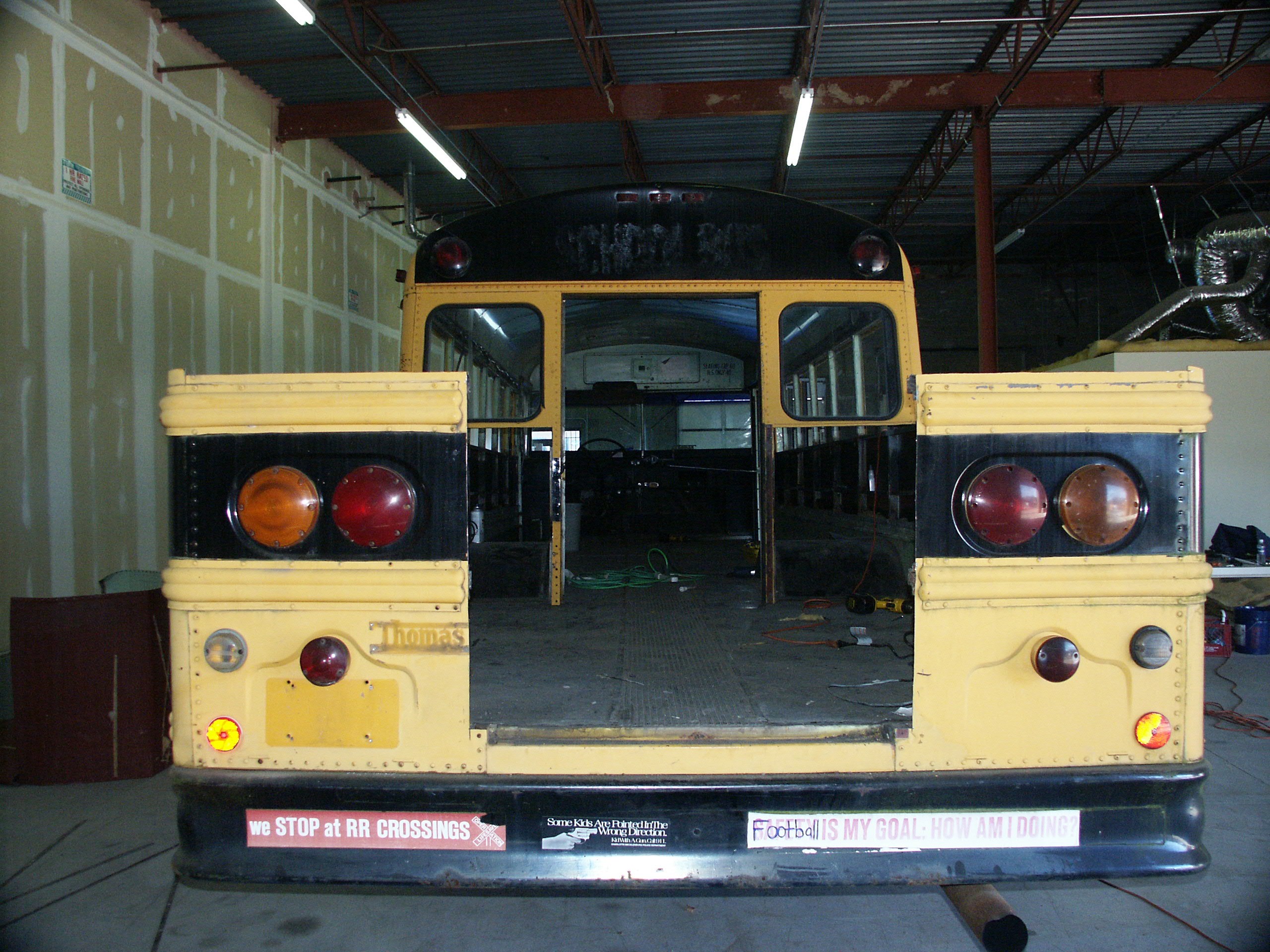
The timing only added to the pressure. Carolina had reached the playoffs, and the builders desperately wanted the Party Prowler ready before the Panthers hosted the Dallas Cowboys in the NFC Wild Card game. There was no opportunity to pause until spring or wait for perfect conditions. The project became an all-consuming race against the football calendar. Days were spent working around conference calls and business responsibilities before returning immediately to grinders, welders, and measuring tapes. They transformed an empty commercial garage into a fabrication shop where sparks routinely flew across the concrete floor and pieces of school bus gradually disappeared. By kickoff the Party Prowler wasn't actually finished. Half of the bus still wore its original yellow paint while the rest had only received black primer. James didn't care. It was functional. Panthers fans loved it anyway. Visitors filled the unfinished panels with handwritten messages celebrating Carolina's playoff run before James later stripped the entire bus back to bare metal and completed the transformation the way he had envisioned from the beginning. Looking back now, that unfinished debut somehow feels appropriate. The Party Prowler was never intended to be unveiled like a polished show car. It was built the same way every great tailgate grows: one game, one improvement, and one unforgettable Sunday at a time.

As ambitious as the structural transformation had been, shortening the bus was only the beginning. James always described the Party Prowler as a tailgate headquarters, and headquarters are built around efficiency. Every decision that followed served a practical purpose. Long before "plug and play" became part of the technology vocabulary, that was exactly how he envisioned game day. The bus remained plugged into power at his home throughout the week, keeping a full-size refrigerator and freezer running continuously so food, beverages, and ice could be loaded days before kickoff. On Sunday morning, all that remained was unplugging the shore power, climbing into the driver's seat, and heading toward Charlotte. During the twenty-five minute drive, the onboard generator seamlessly took over. Once the Party Prowler rolled into its reserved parking space outside Bank of America Stadium, there were no coolers to unpack, no extension cords stretching across the pavement, and no frantic search for forgotten supplies. Remote controls extended a seventeen-by-fifteen-foot electric awning over the gathering area while strategically placed exterior outlets powered crock pots, lights, speakers, and anything else the day required. Hidden behind the walls was an electrical infrastructure that most visitors never noticed, but James considered it one of the most important parts of the entire build. The goal had never been to impress people. The goal was to remove every obstacle that distracted from spending time together.

That philosophy even shaped the ideas that never made it into the finished bus. During the earliest design discussions, James became fascinated with the possibility of placing a hot tub on the newly created rear deck. It wasn't simply a joke tossed around over a few beers. He genuinely explored whether the dimensions would work, whether the structure could support the weight, and how such an outrageous centerpiece might fit into the overall design. Before those conversations progressed much further, the project's unofficial board of directors, otherwise known as their wives, stepped in with an emphatic veto. Looking back today, James laughs about the idea, admitting it probably would have introduced far more complications than enjoyment. Yet abandoning the hot tub unexpectedly led to one of the Party Prowler's most recognizable features. Instead of plumbing and pumps, the rear deck became an elevated gathering place anchored by eight authentic blue stadium seats rescued from Philadelphia's Veterans Stadium before its demolition. Friends immediately joked that simply sitting in them made people a little angrier, which seemed perfectly appropriate for seats that had spent decades housing Eagles fans. More importantly, they transformed the patio into a place where people naturally gathered before and after every game. Sometimes the best design decisions are the ones you never intended to make.
Everywhere visitors looked, they found another reminder that the Party Prowler had been built by people who expected to use it every weekend. James hand-painted the oversized Panthers logos because no company at the time could produce graphics large enough to fit the bus. He projected the artwork onto the body, traced every line with grease pencil, then carefully masked and painted each color by hand. Inside, the ceiling gradually filled with signatures from Panthers players, cheerleaders, and even original owner Jerry Richardson, turning the interior into an evolving scrapbook of Carolina football. The bathroom eventually became reserved for members of the core group after years of discovering that not every visitor could be trusted with such privileges. Even the lighting reflected James' obsession with preparation. Low-voltage outlets hidden along the exterior powered decorative lighting for prime-time games, while dedicated speaker connections eliminated tangled extension cords and loose wiring. Every improvement answered a question that had arisen on a previous Sunday. Every new feature quietly eliminated another inconvenience. By the time the Party Prowler reached its mature form, setup had become almost effortless because James had already solved the problems years earlier.

As remarkable as the engineering became, the Party Prowler's influence reached well beyond Charlotte. Panthers fans began dreaming bigger about what a tailgate could become. The bus captured first place in the Panthers' inaugural Pride Ride competition during the 2011 NFL Draft celebration when Cam Newton arrived as the franchise's newest quarterback. It repeated the accomplishment the following year before graciously stepping aside as newer creations began appearing around the stadium. National brands including Pepsi, Campbell's Chunky Soup, Bush's Beans, Bud Light, Red Bull, and Monster Energy sought out PantherFanz for commercials, promotions, and marketing campaigns. Television crews followed the Party Prowler down Interstate 77 while cameras captured fans relaxing on the rear patio as Charlotte traffic backed up behind the slow-moving school bus. Bobby Flay stopped by. Magazines featured the bus. Commercials introduced it to audiences who had never attended a Panthers game. None of that recognition had been part of the original plan. James simply wanted to stop loading coolers every Sunday. The attention arrived because other people recognized the ingenuity that had quietly transformed one retired school bus into something entirely original.
Nothing lasts forever, even legendary gameday machines. After more than a decade of faithful service, the original engine finally gave out while the Party Prowler was pulling into the stadium on game day. Rather than immediately scrapping the bus, James found another purpose for it. For seven more seasons it remained parked on PantherFanz's reserved lot, serving as secure storage while plans quietly developed for its successor, an equally ambitious fire truck that carried forward everything its predecessor had taught them. When retirement finally became unavoidable in 2025, James couldn't bring himself to send the old bus to a scrapyard. There were simply too many memories welded into its frame. Instead, the Party Prowler made one final journey to the mountains of North Carolina, where it now overlooks family property that has become a gathering place of a different kind. The engine may no longer run, but the refrigerator still cools drinks, the awning still unfolds over summer evenings, and hunters now gather inside the same walls that once carried generations of Panthers fans toward football Sundays. It remains exactly what James always intended it to be: a place where people come together.

Looking back across more than two decades, it becomes clear that the Party Prowler's greatest innovation wasn't the shortened body, the elevated patio, the hidden electrical system, or even the refrigerator that stayed cold from one Sunday to the next. Those were simply solutions to practical problems. James Hastings understood something that many builders overlook. The purpose of a great tailgate rig is not to become the attraction. Its purpose is to remove every distraction so the people around it become the focus. The Party Prowler accomplished exactly that. It welcomed Panthers fans and visiting supporters with the same hospitality. It inspired countless builders to think beyond pickup trucks and pop-up tents. It demonstrated that imagination, a welder, and a willingness to learn could accomplish things no catalog could ever sell. Most of all, it proved that the greatest Gameday Machines are never really about steel or paint. They are about creating a place where friendships grow stronger, traditions take root, and every football Sunday feels just a little more like coming home.