Gameday Machines: The DumDog Bus


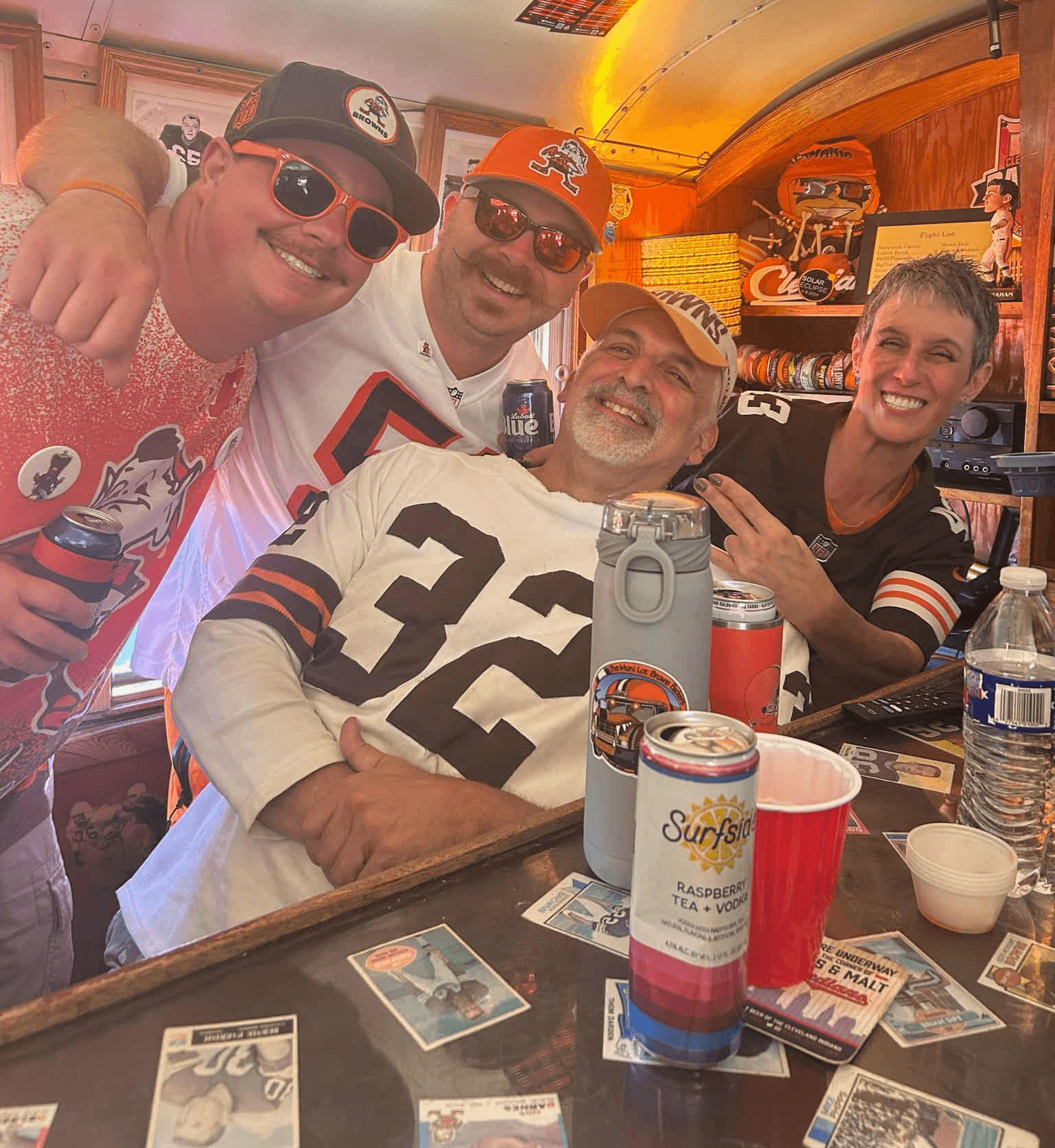
Inside the DumDog Bus, the ritual begins the same way it has for years. A crowd gathers around the long bar that runs down the center of the bus. Cleveland Browns memorabilia covers nearly every available surface. Some of the faces are familiar, people who have spent countless Sundays together in the Muni Lot. Others are first-time visitors who wandered over to investigate the giant dog wearing a football helmet parked among the sea of orange and brown. Someone begins pouring a bright orange liquor into a row of waiting shot glasses. Arms rise. Conversations pause. The chant starts with a few voices before quickly spreading through the bus. “Here we go Brownies, here we go. Woof! Woof!” The shots disappear. Laughter follows. Outside, Cleveland's legendary Muni Lot is already alive with activity as thousands of Browns fans continue one of the most unique traditions in professional sports. For generations, the Muni Lot has been far more than a parking lot. It has been a proving ground for creativity, a gathering place for lifelong friendships, and a place where football fans learned that the tailgate itself could become every bit as important as the game waiting inside the stadium. Standing at the center of that culture for more than two decades is the DumDog Bus, one of the most recognizable tailgate vehicles in America and a rolling symbol of how Cleveland tailgating has evolved from a simple pregame gathering into a destination all its own.
Long before the DumDog became a fixture in the Muni Lot, Scott Nunnari was simply another Browns fan looking forward to Sundays. When he became a season ticket holder in 1993, tailgating existed, but it occupied a very different place in the overall game day experience. Fans arrived early, grilled food, drank a few beers, and spent time with friends before making their way into old Cleveland Municipal Stadium. The game remained the centerpiece. The atmosphere inside the stadium carried a sense of anticipation that defined the day. Scott remembers arriving early with friends, setting up horseshoe pits, and gathering around coolers before walking into what many Browns fans still consider one of the most memorable football environments the city has ever known. Then came 1995. Art Modell's decision to move the franchise to Baltimore devastated Cleveland. The loss went beyond football. It felt personal. Fans who had invested generations of loyalty suddenly found themselves fighting for the survival of their team's identity. Cleveland responded the only way Cleveland could. Yard signs appeared across the city. Fans flooded NFL offices with letters, phone calls, and faxes. Community leaders and ordinary supporters rallied behind a movement to bring football back. During those years, the bonds between Browns fans only grew stronger. The shared struggle created a deeper connection that would later fuel the explosive growth of Cleveland's tailgating culture when the Browns finally returned.


When football came back to Cleveland in 1999, something had changed. The passion remained, but the tailgating culture surrounding the team had evolved. Fans who had spent years fighting for their franchise returned with a renewed appreciation for the community that football created. The Muni Lot emerged as the epicenter of that movement. It became a place where friendships formed, traditions developed, and personalities like Big Dog and The Bone Lady helped define what Cleveland Browns fandom looked like during a new era. Tailgating gradually transformed from a simple pregame activity into a destination. More people arrived earlier. Setups became larger. Traditions became more elaborate. Scott found himself increasingly fascinated by the possibilities. He had always admired unique vehicles and unusual projects. While many fans focused on improving tents, grills, or sound systems, Scott began imagining something different. He wanted a tailgate vehicle. Not simple transportation to the party, but the party itself. At a time when very few fans anywhere in the NFL were building purpose-designed tailgate machines, the idea felt ambitious. Looking back now, it was simply the next step in a process that would eventually help redefine what was possible inside the Muni Lot.

The opportunity arrived unexpectedly through a group of friends who called themselves the Cleveland Bonding Company. They had purchased a former marina shuttle bus from Canada that already contained a full-length bar, refrigerator, and enough personality to make it memorable. After a series of unfortunate events left the vehicle impounded and unwanted, Scott became its new owner. What happened next represented one of the earliest examples of a purpose-built tailgate vehicle in Cleveland. The bus was painted orange. Kegs were installed. The interior renovation made this shuttle bus a rolling bar. More importantly, the bus itself became the destination. Fans had seen vehicles used for tailgating before. What they had not seen was a vehicle that existed entirely for tailgating. Scott and his crew began arriving at the Muni Lot before dawn, often among the first people through the gates. The bus became a gathering place. Crowds grew larger. Overnight tailgates appeared. One memorable New Year's Eve celebration transformed the Muni Lot into a giant outdoor party complete with a Browns-themed ball drop before a victory over Baltimore the following day. The old orange bus may have looked rough around the edges, but it represented something significant. It pushed the culture forward. It encouraged others to think bigger. It helped transform the Muni Lot into the vibrant and creative environment that would later become famous throughout the NFL.

Eventually, however, the first bus reached the end of its useful life. Mechanical issues became increasingly common and maintaining a vehicle with more than 300,000 miles no longer made financial sense. Around the same time, Scott inherited a collection of ceramic dogs from his grandmother. Unsure what to do with them, he painted Browns helmets on the figurines and displayed them inside the bus. The idea lingered in the back of his mind. What if the next bus looked like a dog wearing a Browns helmet? Scott envisioned a creative paint scheme and perhaps a few decorative touches. His best friend Bruce MacLaren envisioned something entirely different. When Bruce presented his first sketch, Scott was stunned. Instead of a decorated bus, Bruce imagined a giant canine sculpture rolling through Cleveland. The design featured an enormous football helmet, oversized paws, a barrel beneath the hood, and a face that looked as though it had escaped directly from the Dawg Pound. It seemed impossible. It also seemed perfect. Bruce possessed a rare combination of creativity, craftsmanship, and problem-solving ability. He could see the finished product long before anyone else could. What began as a simple idea suddenly became an ambitious project that would require hundreds of hours of labor and a level of commitment that few people would have attempted.


Construction began in March of 2006 after Scott located the ideal replacement vehicle, a relatively low-mileage dog-nose school bus that would serve as the foundation for the project. For the next six months, a small army of friends devoted themselves to bringing Bruce's vision to life. The helmet became the most complex element of the build. A steel framework was constructed and mounted through the roof before being covered in fiberglass and painstakingly shaped by hand. The process involved countless trips to hardware stores, endless sanding, unexpected setbacks, and more than a few moments when the project appeared determined to fight back. Friends worked evenings, weekends, and entire weeks while Scott traveled for work. The interior received custom cabinets, upgraded keg systems, improved finishes, and a layout designed specifically for entertaining large groups. Bruce focused primarily on the exterior, transforming ordinary materials into something that looked impossible. The paint was still drying when the DumDog made its maiden voyage to the Muni Lot. Scott remembers brown paint still sticking to his hands while fueling the bus. The giant helmet remained one of the final pieces completed. Yet somehow everything came together just in time. As dawn approached and the illuminated eyes glowed through the darkness, fans entering the lot stopped in disbelief. Nothing remotely similar existed anywhere in professional football. The reaction was immediate. People gathered around the bus. Photographs were taken. Drinks were poured. In a fitting moment that perfectly captured the spirit surrounding the project, Bruce was married beside the DumDog that same day with Scott performing the ceremony. The bus had arrived, and Cleveland tailgating would never look quite the same again.

Over the years, the DumDog continued evolving according to a simple philosophy embraced by Scott and his crew. If something breaks, improve it instead of repairing it. That mindset transformed the bus into a constantly evolving work of art. Hardwood floors replaced the original tile. New cabinetry appeared. The Otto Shot, named for the legendary Cleveland Browns quarterback, joined the party. Additional keg capacity expanded the hospitality. Outside, the DumDog acquired the ability to lift its leg and relieve itself on a Steelers-themed fire hydrant, delighting generations of Browns fans and children alike. Every addition served the same purpose. Make the party better. Create another reason for people to gather. Encourage another conversation between strangers. Yet the true significance of the DumDog has never been the fiberglass, the steel, or the engineering. Its importance lies in what it represents. Throughout every stage of Cleveland tailgating's evolution, Scott Nunnari and his friends repeatedly challenged themselves to raise the bar. They helped transform tailgating from a few friends standing around a cooler into a destination worthy of national attention. They introduced one of the first true tailgate vehicles to the Muni Lot. They replaced it with a rolling icon that inspired others to think bigger about what was possible. Most importantly, they helped create a culture rooted in hospitality, inclusion, and friendship. Today, when visitors climb aboard the DumDog and join the crowd gathered around the bar, they are participating in something much larger than a tailgate. They are becoming part of a tradition that has spent decades bringing people together. Another round is poured. Another chant echoes through the bus. Another stranger becomes a friend.That is the real legacy of the DumDog Bus, and it is why few gameday machines have left a larger mark on the culture of tailgating in Cleveland.


Original concept design drawing for the DumDog.