Breaking Tables in Buffalo: The Story Behind the NFL’s Most Infamous Tailgate Tradition

Nobody really knows who broke the first table in Buffalo. That uncertainty feels strangely appropriate because the best traditions in football rarely arrive with witnesses, official timelines, or unanimous agreement. They appear slowly, quietly at first, gathering meaning one story at a time until eventually people stop asking when they started and begin assuming they have always existed. Somewhere in the blacktop landscape surrounding the Ralph Wilson Stadium, or New Era Field, or Highmark Stadium, amid cheap folding chairs, battered coolers, stubborn loyalty, and generations of fans who learned how to laugh at hardship without surrendering to it, a folding table became something larger than furniture. It became theater. It became ritual. It became mythology. And somehow, against every ounce of common sense, it became one of the defining images of modern NFL fandom.
To outsiders, the scene can feel impossible to understand. A fan climbs onto a vehicle or a makeshift platform while a crowd gathers with phones raised overhead. Someone points dramatically toward a folding table positioned below like an offering to football itself. There is laughter, anticipation, bravado, and an unspoken understanding that logic has momentarily left the premises. Then comes the leap, the collision, the collapse of aluminum legs and splintering plastic as bodies crash harmlessly or sometimes painfully onto the pavement below. The crowd erupts, strangers embrace, someone inevitably lifts both hands skyward like a pro wrestling champion, and the moment immediately enters Buffalo folklore. It looks absurd because it is absurd, yet the deeper truth is that table smashing says something surprisingly profound about the people who continue showing up in Orchard Park every Sunday.
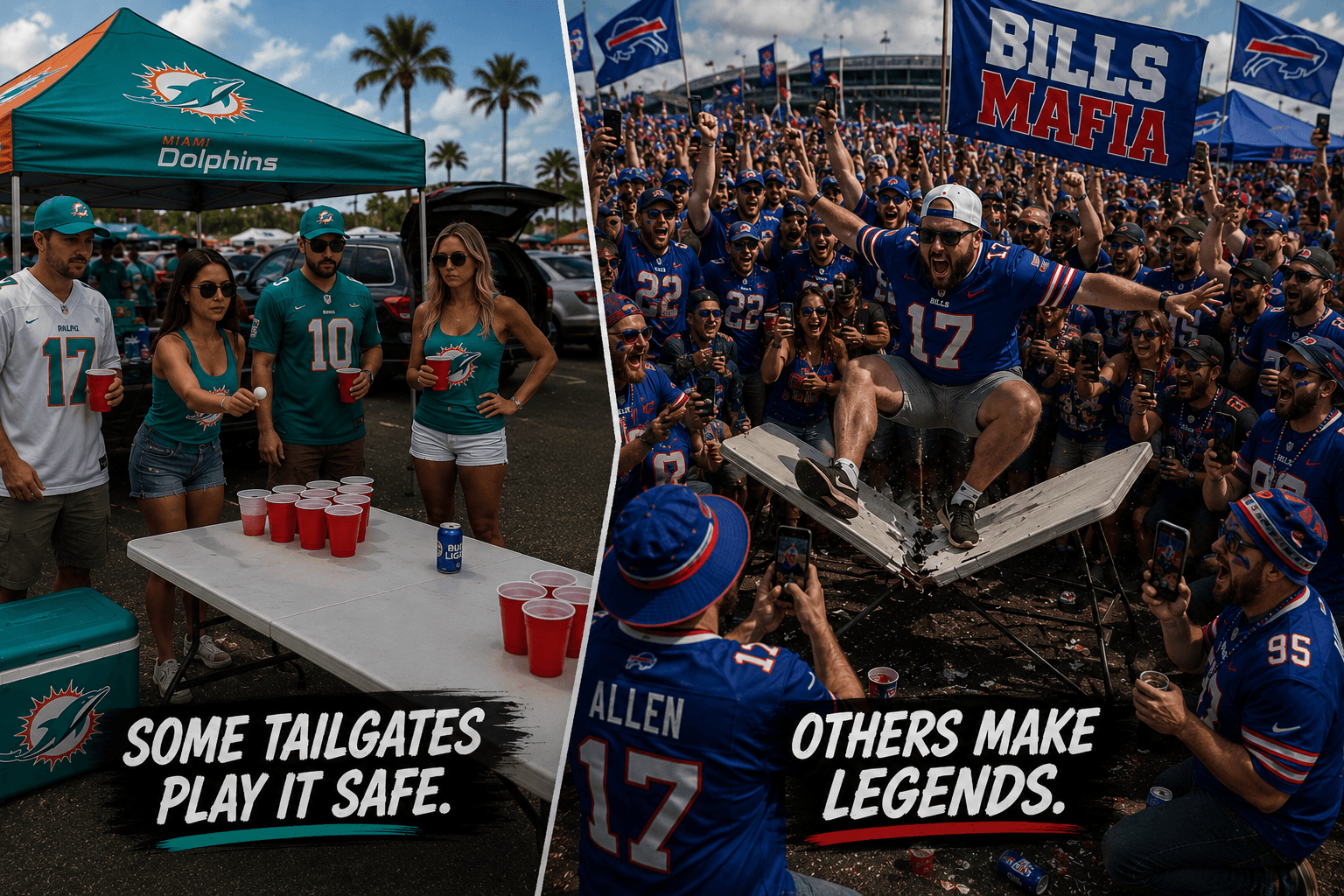
Like most folklore, the origin story shifts depending on who is telling it. Bills fans do not speak about table smashing the way historians debate timelines. They talk about it like fishermen discussing the biggest catch or grandparents retelling local legends. Everyone knows a version of the story. Everyone remembers hearing about somebody who supposedly started it. Everyone swears they saw it happen before anyone else was paying attention. That uncertainty only deepens the mystery because the ritual feels too strange, too wonderfully irrational, to belong neatly to a single inventor.
What is easier to trace is the environment that allowed the tradition to emerge. During the long years after Buffalo’s Super Bowl era faded, the Bills entered one of the most frustrating stretches in franchise history. Seasons drifted by without playoff appearances. Coaches changed. Quarterbacks came and went. Expectations lowered while heartbreak somehow remained constant. But the fans never disappeared. Tickets remained affordable enough for younger crowds to attend regularly, and Orchard Park offered something increasingly rare in professional sports. Space. Freedom. Vast parking lots and privately owned tailgating areas stretched around the stadium, many with little oversight and few restrictions. Fans arrived hours before kickoff, turning Sundays into all day experiences where football occupied only part of the emotional equation. For many people, especially during lean seasons, the tailgate itself quietly became the main attraction.
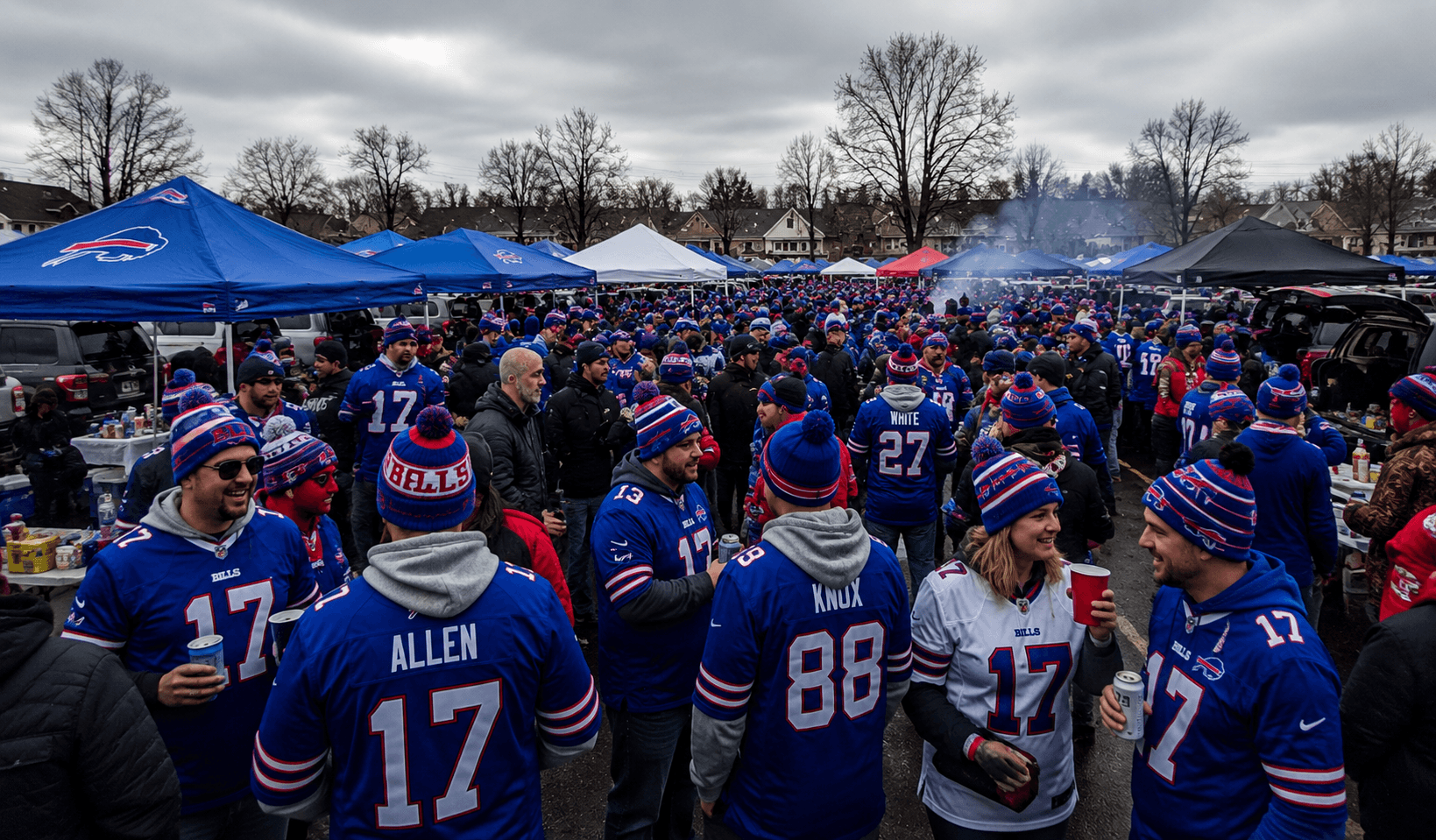
There is an honesty among longtime Bills fans when discussing those years because many openly admit that survival required creativity. Buffalo football during the drought years demanded emotional resilience. Fans still cared deeply, but hope alone could not carry every Sunday. Tailgating became part celebration, part therapy session, part comedy routine, and part endurance challenge against cold weather and disappointment. If the game threatened to disappoint, the parking lot never could. Humor became a defense mechanism. Community became medicine. Somewhere inside that atmosphere, folding tables entered the conversation almost naturally because absurdity already belonged to Buffalo football culture.
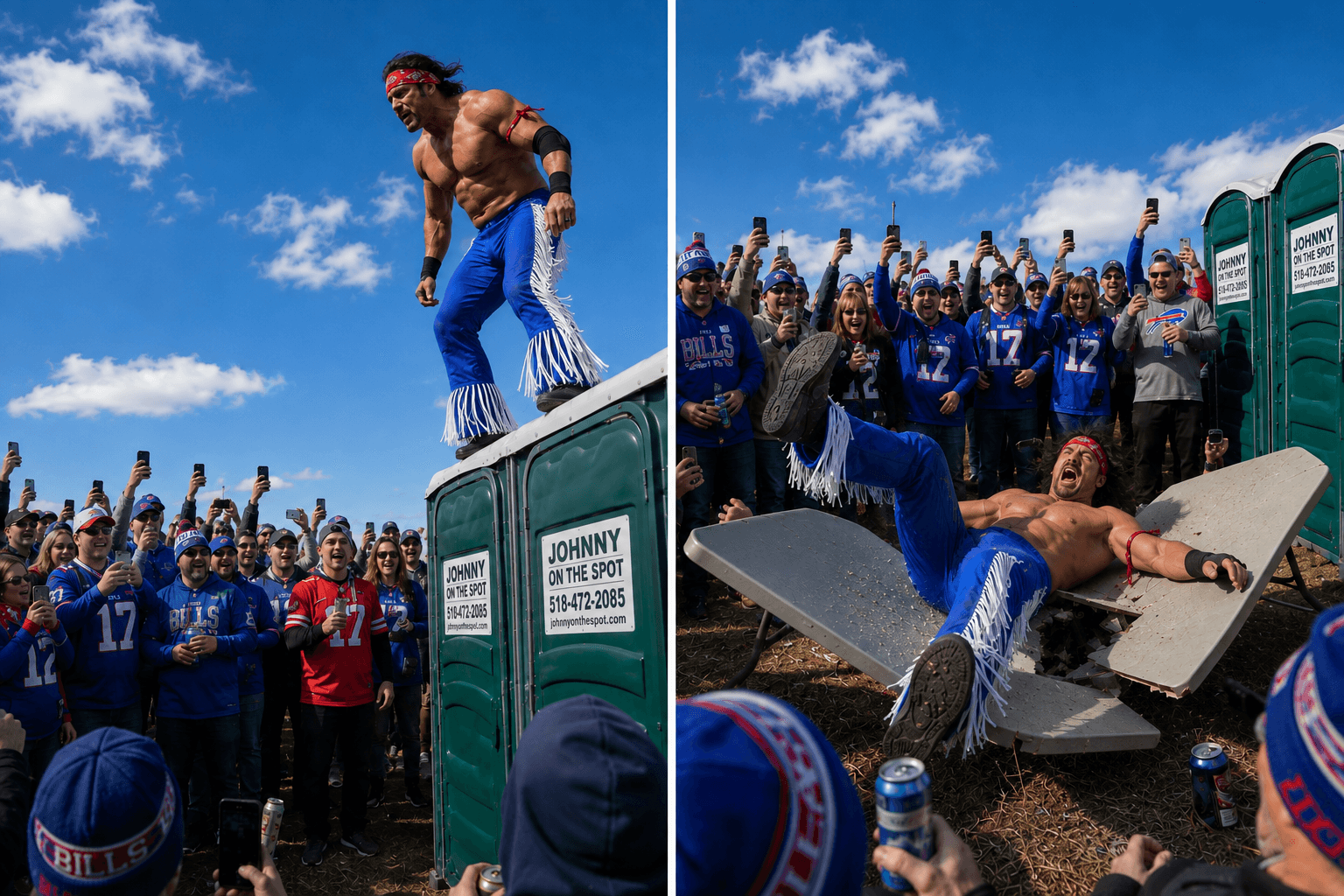
Professional wrestling almost certainly shaped the ritual long before anyone thought of it as tradition. Buffalo sits close enough to wrestling culture that generations of fans grew up watching dramatic table crashes become symbols of rebellion and chaos. Wrestlers launching opponents through tables on television felt theatrical, ridiculous, painful, and strangely triumphant all at once. The language of wrestling translated easily to a tailgate filled with laughter, bravado, and young fans searching for stories worth retelling on Monday mornings. Many people who study the tradition believe table smashing first emerged from drunken reenactments of wrestling moments in parking lots where rules already felt optional. Nobody gathered intending to create football history. Somebody simply climbed up, somebody else shouted encouragement, and somebody decided a folding table looked breakable.
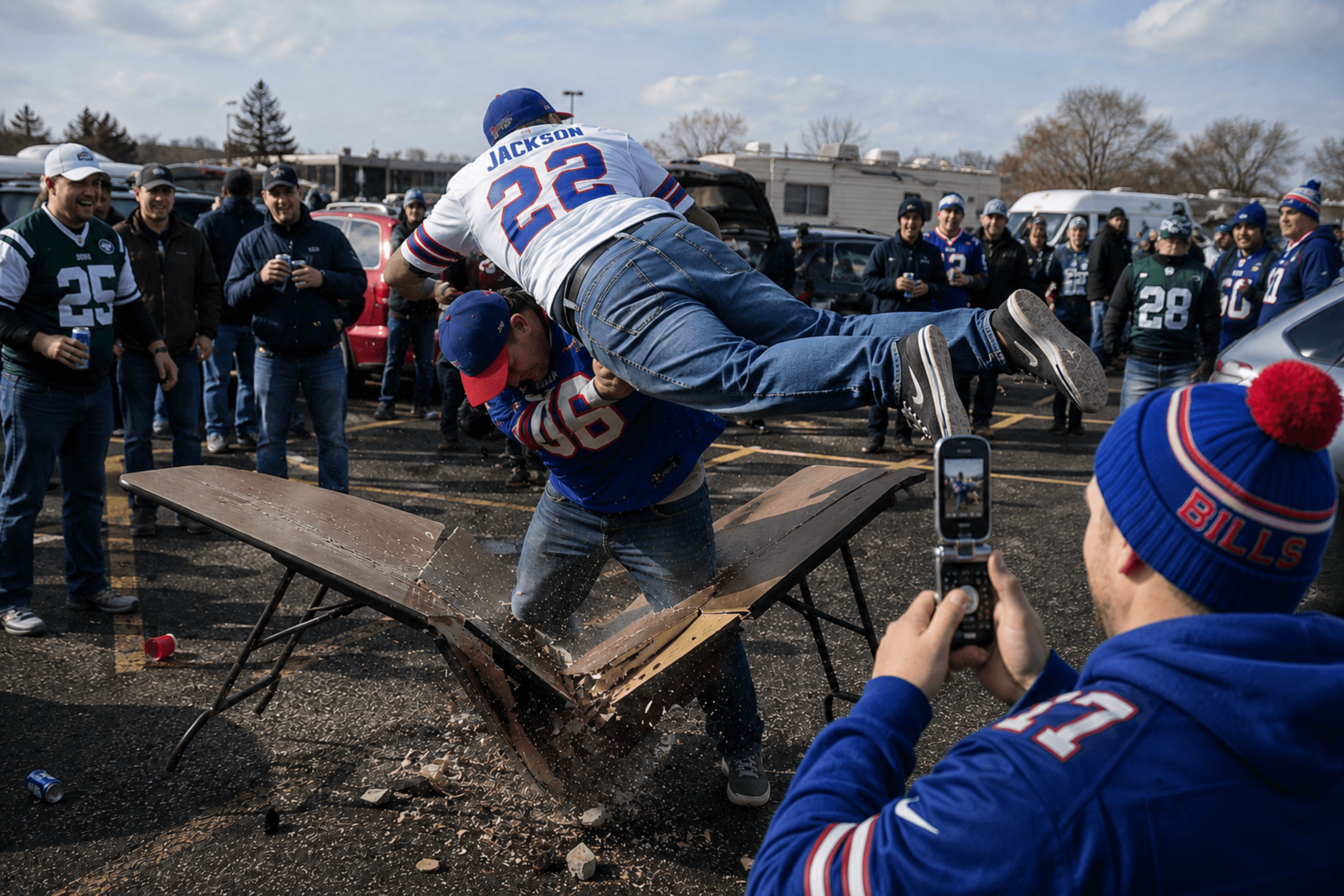
Several competing stories claim ownership of what happened next. Some point toward Bills Army, a tailgating group parked in Lot 5 on Southwestern Boulevard whose members posted a video of table smashing as early as Christmas Eve in 2006. Long before national audiences paid attention, grainy clips surfaced online showing fans crashing through tables while friends laughed behind shaky cameras. The footage lacked polish and self-awareness, which strangely makes it feel authentic. Nobody in those early videos behaves like someone trying to launch a movement. They simply look like Buffalo fans entertaining themselves during difficult football years.
Others point toward Dan Greneda, who later claimed he helped normalize the behavior after jokingly asking a friend around 2012 to body slam him through a table in pro wrestling fashion while wandering a Bills tailgate. According to Greneda, they repeated the stunt week after week, eventually escalating the performance through costumes and exaggerated theatrics. The irony inside his story feels deeply Buffalo because Greneda himself is a Seahawks fan, making him an accidental contributor to Bills mythology rather than one of its native sons. His story matters not because it definitively explains the origin, but because it illustrates how traditions spread. Somebody does something ridiculous. Somebody else imitates it. Soon repetition becomes expectation.
Still others believe the ritual exploded because of Jordan Grills, a college student at SUNY Fredonia who developed a reputation with his friends for diving through tables during off campus chaos long before he entered Bills parking lots. Grills and his roommates filmed themselves front flipping into tables from porches, balconies, and elevated platforms while jokingly becoming known as the guys who liked to break tables. On September 20, 2015, during a Bills game against New England, strangers recognized him at a tailgate and invited him to attempt another jump. The resulting video, in which Grills front flips directly onto a table only for it to stubbornly refuse to break, spread rapidly online as a spectacular failure. Grills later offered perhaps the best explanation of Buffalo folklore itself when reflecting on his role in the phenomenon. He famously said he did not claim to be the first person to go through a table at a Bills game, but believed he “shot the musket ball that started the revolution.” That sentence somehow feels inseparable from Buffalo itself because it acknowledges the truth hiding underneath every good football tradition. Nobody invents mythology alone.
The internet transformed isolated chaos into ritual. Before smartphones, tailgate stories largely disappeared after Monday morning conversations. Once every fan carried a camera, Buffalo’s parking lot culture suddenly gained permanence. Videos circulated through message boards and social media feeds. Deadspin picked up clips and introduced table smashing to audiences who reacted with equal parts fascination and disbelief. Soon Barstool Sports amplified the spectacle further, reposting increasingly outrageous attempts until the image of Bills fans crashing through folding tables became nationally recognized shorthand for Buffalo fandom. One upmanship inevitably followed. Higher jumps appeared. More elaborate setups emerged. What began as isolated foolishness evolved into performance, and performance slowly hardened into identity.
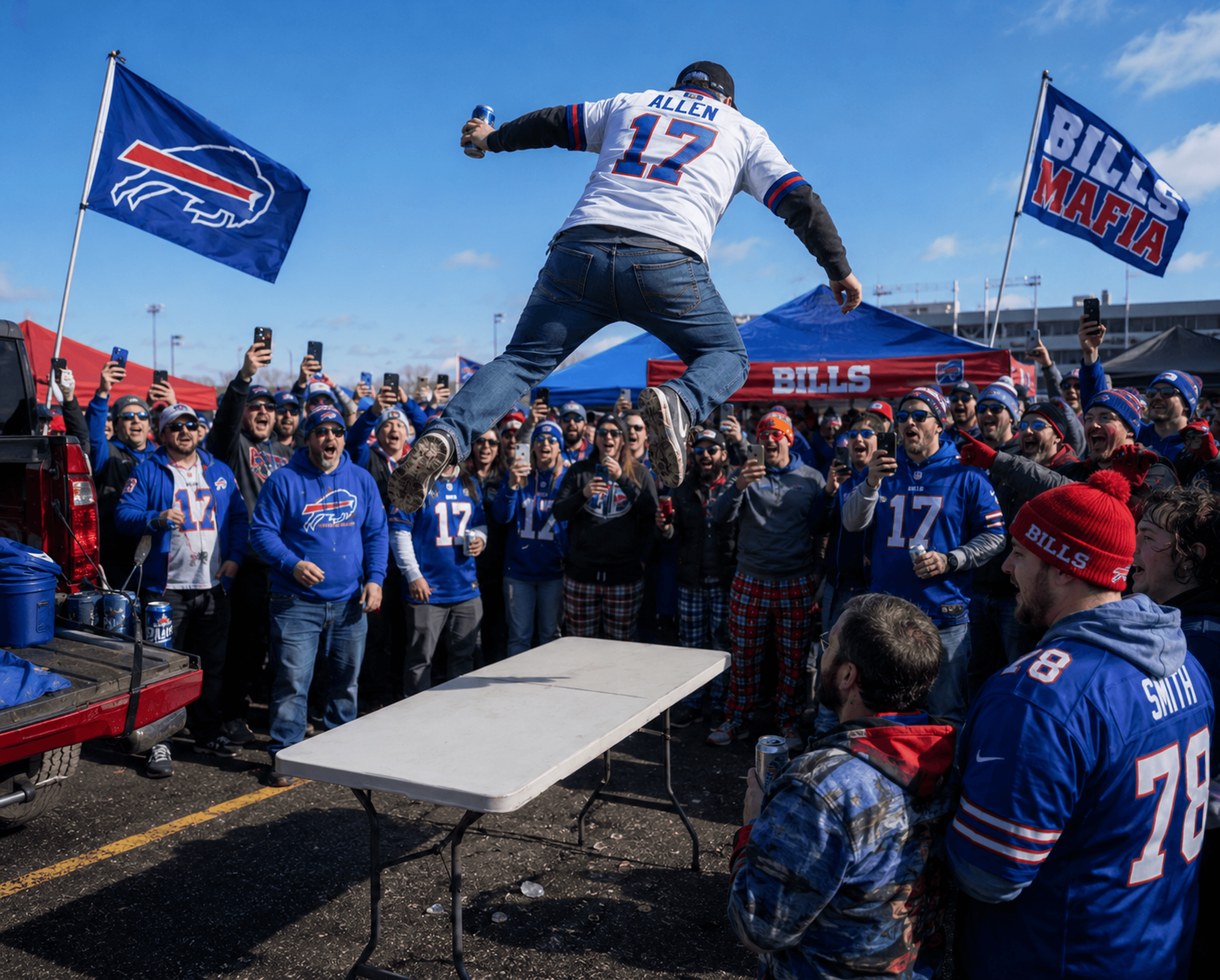
Yet reducing table smashing to internet virality misses the deeper truth entirely because Buffalo embraced the ritual not merely for entertainment, but because it reflected something emotional about the city itself. Buffalo understands hardship. Winters arrive brutally. Industries disappear. Sports heartbreak lingers. Outsiders joke about snow, disappointment, and losing seasons. Bills fans have long responded to hardship not through denial, but through humor sharp enough to disarm embarrassment before anyone else can weaponize it. Table smashing reflects that emotional instinct perfectly. Nobody leaps through a folding table believing they appear dignified. The ridiculousness is part of the appeal. Buffalo fans laugh at themselves before anyone else gets the chance, transforming chaos into identity and humiliation into pride.
That transformation explains why the ritual spread so deeply into everyday Bills culture. Weddings now feature folding table references as affectionate inside jokes. Babies appear in Bills Mafia outfits crashing through miniature plastic tables for social media clips. Tailgates routinely include symbolic table crashes carried out with the familiarity of old rituals passed down through generations. What once felt rebellious somehow became tradition without losing its edge. The absurdity remains, but now it feels inherited.
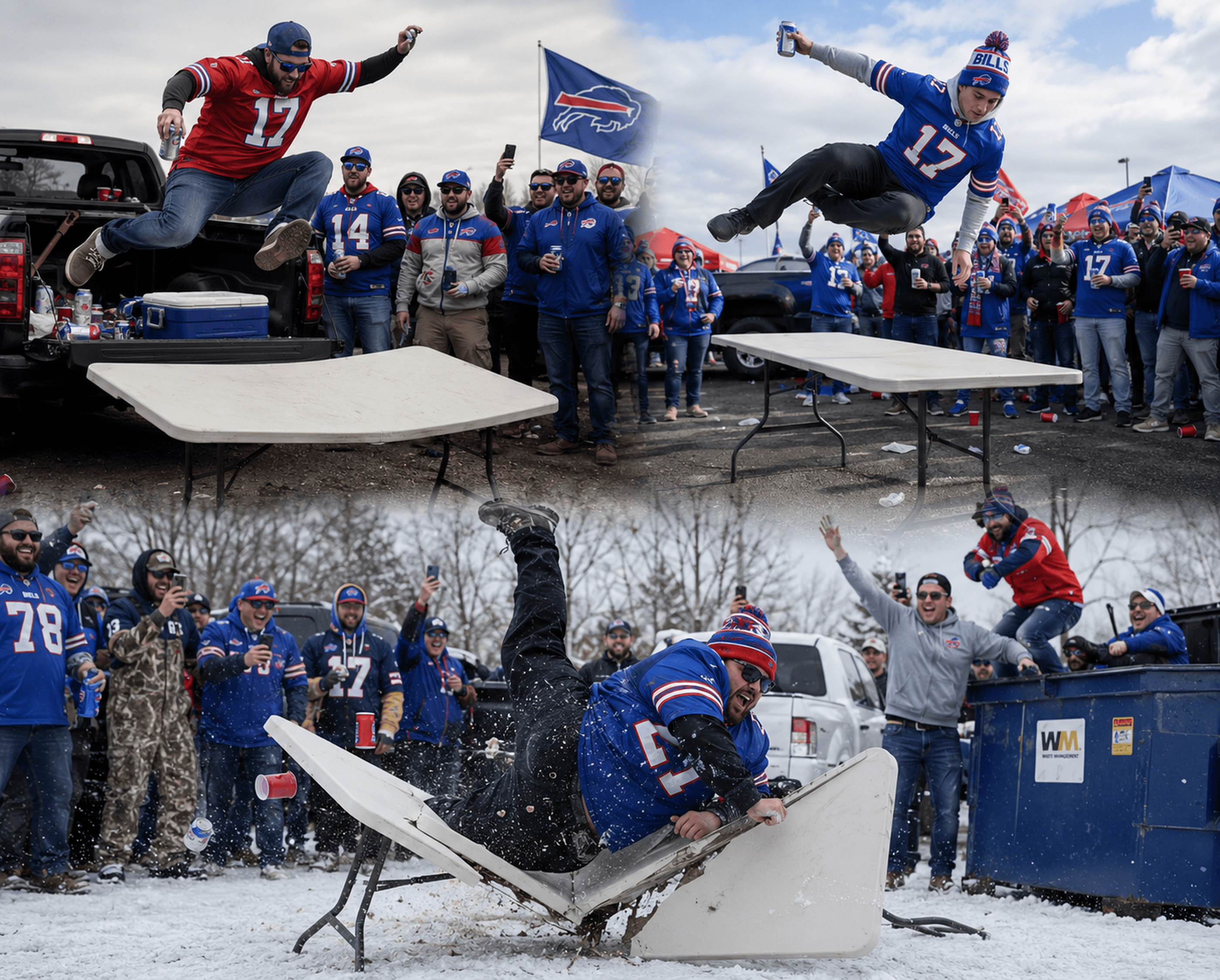
Nobody truly knows where the first table shattered. Maybe Bills Army deserves the title. Maybe a wrestling fan with too much confidence stumbled accidentally into immortality years later. Maybe college kids with cheap cameras unknowingly accelerated something already happening. Or maybe the answer matters less than the mystery itself because football traditions rarely emerge cleanly enough to satisfy historians.
Some traditions are designed. Others simply grow. Buffalo’s folding tables feel less invented than discovered, as if they had been waiting all along for the right mixture of losing seasons, cheap tickets, open parking lots, social media cameras, humor, recklessness, and relentless loyalty to reveal their purpose. Somewhere along the way, folding tables stopped being objects and became symbols of Buffalo’s willingness to laugh, survive, and keep showing up no matter what the standings suggested.
That may be the strangest truth of all. In Buffalo, crashing through a folding table somehow became another way of saying you belong.