THOF Spotlight: The Warrior in the Stands


There are moments in every NFL stadium when the game itself briefly fades into the background. A roar ripples through the parking lot as someone approaches. Conversations stop in mid sentence. Children tug at their parents' sleeves and point. Visiting fans instinctively reach for their phones while Raiders fans simply grin, already knowing exactly who is coming. Dressed in black leather armor with shoulder pads covered with spikes, towering boots and unmistakable war paint, the figure moves through the crowd with the presence of a gladiator entering an ancient arena. He pauses for photographs, embraces complete strangers and exchanges handshakes with fans wearing the colors of the opposing team before continuing toward the stadium. By the time he disappears into the sea of silver and black, hundreds of people have experienced something they will remember long after the final whistle. To most of the football world he is known simply as the Violator. To Raider Nation, he represents something much larger than an unforgettable game day character.


That distinction matters because Wayne Mabry never created the Violator to become famous. He wasn't chasing television cameras, social media followers or national attention. Long before elaborate game day personas became common throughout the National Football League, Wayne believed fans carried a responsibility every bit as important as the players on the field. If the Raiders were going to wage war for sixty minutes, Raider Nation needed warriors in the stands. Every piece of what he calls his "war gear" served a purpose. The leather reflected the toughness he admired in the Hells Angels riders who regularly surrounded Raiders football. The shoulder pads tied him directly to the game itself. The spikes drew inspiration from medieval warriors, gladiators and his lifelong fascination with fantasy heroes. Even the iconic black and silver face paint became his personal declaration of war against officials whose decisions he believed stood between the Raiders and victory. None of it was designed as a costume. It was a uniform. Every Sunday, Wayne wasn't dressing up. He was reporting for duty.

Looking back today, it is easy to forget how revolutionary that idea was. In the early 1990s, NFL fans wore jerseys, painted their faces and occasionally added a funny hat or wig. Permanent game day identities were almost nonexistent. Wayne wasn't interested in looking different for the sake of standing out. He wanted to create an environment that could help the Raiders win football games. Hours before kickoff he walked every corner of the Oakland Coliseum parking lots, shaking hands, visiting tailgates and raising the emotional temperature of an entire fan base before anyone entered the stadium. Once inside, he yelled until his voice disappeared, encouraged thousands of fans to remain standing and treated crowd noise as another weapon in the Raiders' arsenal. He believed the people in the stands could influence what happened between the sidelines just as surely as the players wearing silver and black. Decades before sports psychologists and stadium architects began talking about weaponizing home field advantage, Wayne Mabry was already living it.
Long before Wayne Mabry became one of the most recognizable figures in professional football, he was a thirteen year old boy growing up in the tiny Mississippi Delta town of Mound Bayou with an imagination that rarely stood still. While other kids found ways to pass the afternoon, Wayne transformed his bicycle into a war horse, tucked an old broomstick beneath his arm and charged through the neighborhood as though he were a medieval knight riding into battle. Gladiators, castles, pirates and ancient warriors fascinated him from an early age, and he spent countless hours imagining himself in worlds where courage mattered more than circumstance. It was make believe to everyone else, but to Wayne those adventures felt real. Looking back now, it seems almost impossible to separate that young dreamer from the man football fans would eventually know as the Violator. The armor would change. The battlefield would become an NFL stadium. But the warrior had already been there for years.
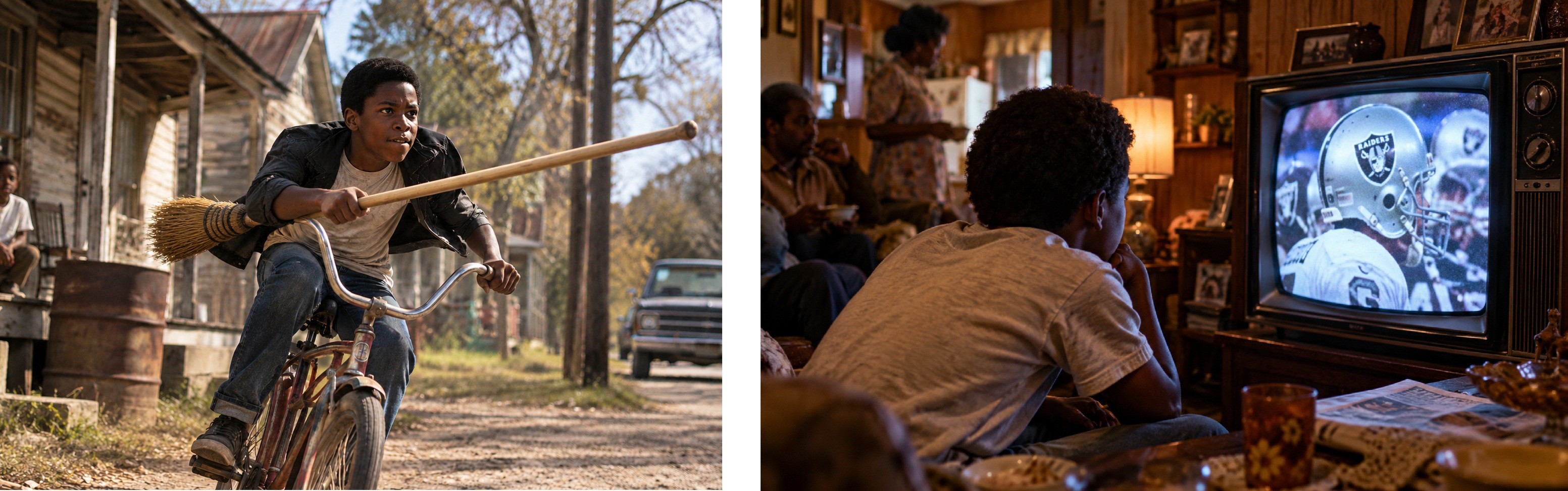

Then came a Sunday afternoon in 1970 that quietly altered the course of his life. Like countless football fans across America, Wayne settled in front of the television to watch the Raiders play the Kansas City Chiefs. He barely remembers the score. What he remembers is the moment the television cameras settled on the Raiders' silver helmets and captured the shield with the one-eyed pirate framed by crossed swords. The colors immediately pulled him in, but the logo completed the transformation. It wasn't simply a football helmet. It looked like something pulled directly from the stories he had been living out on his bicycle. While other franchises wore simple letters or ordinary designs, the Raiders looked like villains from an epic adventure. Wayne didn't know where Oakland was. He didn't know anyone in California. None of that mattered. Before the afternoon was over he had found his football team. Before long, he shocked his mother by announcing that one day he intended to move to California because that's where the Raiders lived. She laughed, dismissed it as another childhood fantasy and reminded him he still had high school and college ahead of him. Wayne never argued. He simply stopped talking about it. The dream had already taken root.

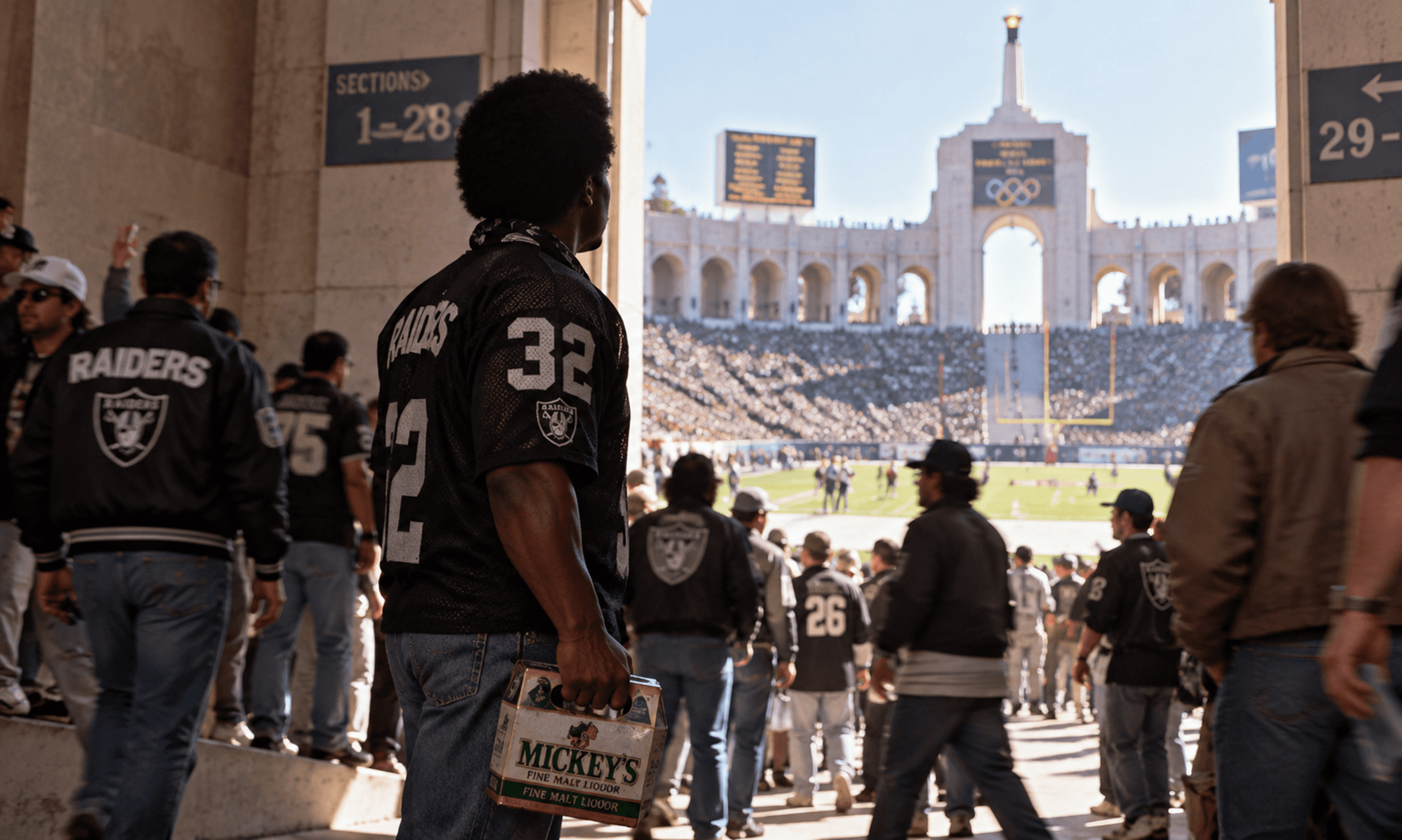
That quiet determination would become one of the defining characteristics of Wayne Mabry's life. Years later, after fulfilling the promises he had made to his family, he packed up and headed west just as he had envisioned as a boy. California wasn't simply a new address. It was where the silver and black lived. When he walked into the Los Angeles Memorial Coliseum for his first Raiders game in 1982, carrying a six pack of Mickey's beer and a ticket he had picked up at will call, he found himself standing beneath the historic Peristyle entrance long before kickoff simply taking it all in. He has often described the Coliseum as a gladiator's arena, and standing there for the first time he wasn't thinking about statistics, standings or playoff races. He was thinking about a promise made to himself years earlier in Mississippi. He had imagined this moment so many times that when it finally arrived he found himself pinching his own arm just to convince himself it was real. From that day forward, watching Raiders games on television would never again be enough.
That realization would become the seed from which the Violator eventually emerged. Long before social media rewarded visibility and long before television cameras searched the crowd for colorful personalities, Wayne wasn't trying to create a character. He believed fans weren't spectators at all. They were participants. If the players accepted the responsibility of defending the Raiders on the field, someone needed to defend them in the stands. The only question was what that warrior should look like.
By the early 1990s, the Black Hole had already become one of professional football's most recognizable sections. Inspired in part by Cleveland's Dawg Pound, Raider fans transformed the end zone into something entirely their own. Faces were painted. Shoulder pads appeared over black jerseys. Chains, masks and homemade armor became increasingly common as Oakland embraced an identity unlike anything else in sports. Wayne loved every minute of it, but he couldn't shake the feeling that something was still missing. If Raider Nation truly believed it was sending warriors into battle every Sunday, then someone needed to look the part.
That philosophy shaped every piece of the Violator's appearance. Wayne quietly corrects anyone who describes it as a costume. Costumes are worn for entertainment before being packed away until the next occasion. Wayne has never viewed the Violator that way. To him, it has always been war gear. Soldiers wear uniforms because they have a job to perform. Athletes wear uniforms because they represent something larger than themselves. Every Sunday morning, as Wayne assembled the leather, spikes, shoulder pads and paint, he wasn't becoming someone else. He was preparing for battle. The objective wasn't memorable photographs or television appearances. It was helping the Raiders win football games. If one opposing quarterback hesitated because communication became impossible, or one Raiders defender found extra energy after hearing the Black Hole erupt, Wayne believed he had done his job.

Today, it is almost impossible to imagine an NFL season without unforgettable characters roaming stadium parking lots and concourses. Vikings wear horns. Browns fans become dogs. Bills fans create larger than life alter egos. Every franchise now has personalities whose identities have become inseparable from the teams they represent. Many embrace those roles hoping to appear on television or become recognizable within their football communities. Wayne Mabry never criticized that evolution. He welcomed it. Football should be expressive, emotional and larger than life. Yet one important difference remains. Wayne never created the Violator to become famous. He created it because he believed fans could influence the outcome of a football game. His mission wasn't visibility. It was victory.
Looking back more than three decades later, it becomes clear that Wayne Mabry accomplished something few football fans ever achieve. He didn't simply create one of the NFL's most recognizable identities. He helped redefine what passionate fandom could look like. The seeds he planted inside the Black Hole spread slowly at first, then steadily, until larger than life game day personas became woven into the fabric of professional football. Today every franchise celebrates fans whose identities have become inseparable from the teams they love, but long before the term "superfan" entered the football vocabulary, Wayne Mabry was quietly showing the rest of the league what was possible. Ideas have a way of spreading when they capture something authentic. They move from one person to another, from one stadium to the next, until eventually they become traditions whose origins are almost forgotten. Wayne Mabry remembers exactly where they began.
