Super Stadium Tour: How Peter Baroody Invented the Modern NFL Travel Craze
Dec 12, 2025
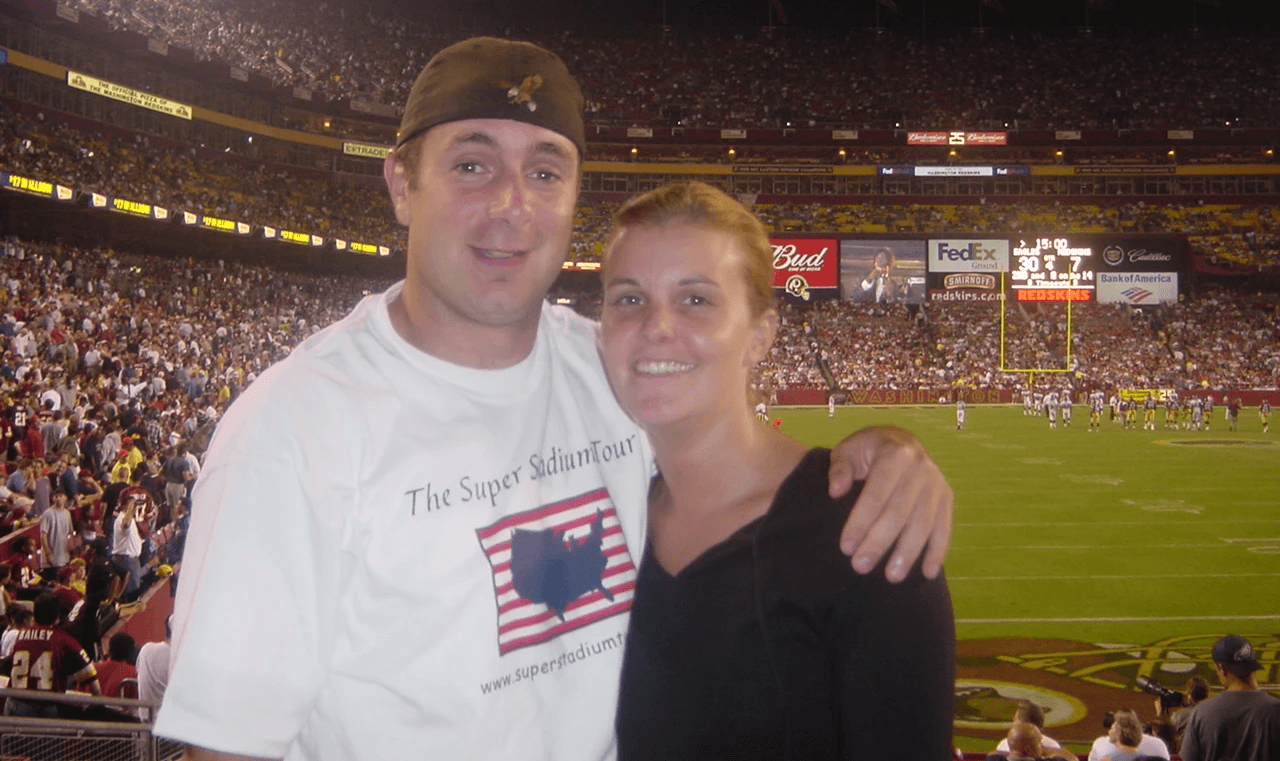
There are two Guinness World Records that define the limits of fan devotion to the National Football League: the fastest time to visit all NFL stadiums and the most NFL games attended in a single season. The current record for the fastest stadium tour belongs to John Bailey, who visited all 32 NFL teams (30 stadiums) in just 74 days back in 2021. Meanwhile, the most games attended in a single regular season is 33, a mark set in 2024 by Hope Leon and Erin Ramsey. What makes these records even more remarkable is that back in 2002, long before primetime overload and streaming services transformed the modern NFL viewing experience, Peter Baroody traveled more than 30,000 miles in 107 days, attending 33 games to become the first person ever certified by Guinness as the “Most Ardent NFL Fan.” Without Pete setting the standard, it's doubtful that so many fans would view NFL travel as something worth undertaking. His Super Stadium Tour did not just create a World Record, I might argue that it spawned a cultural phenomenon.
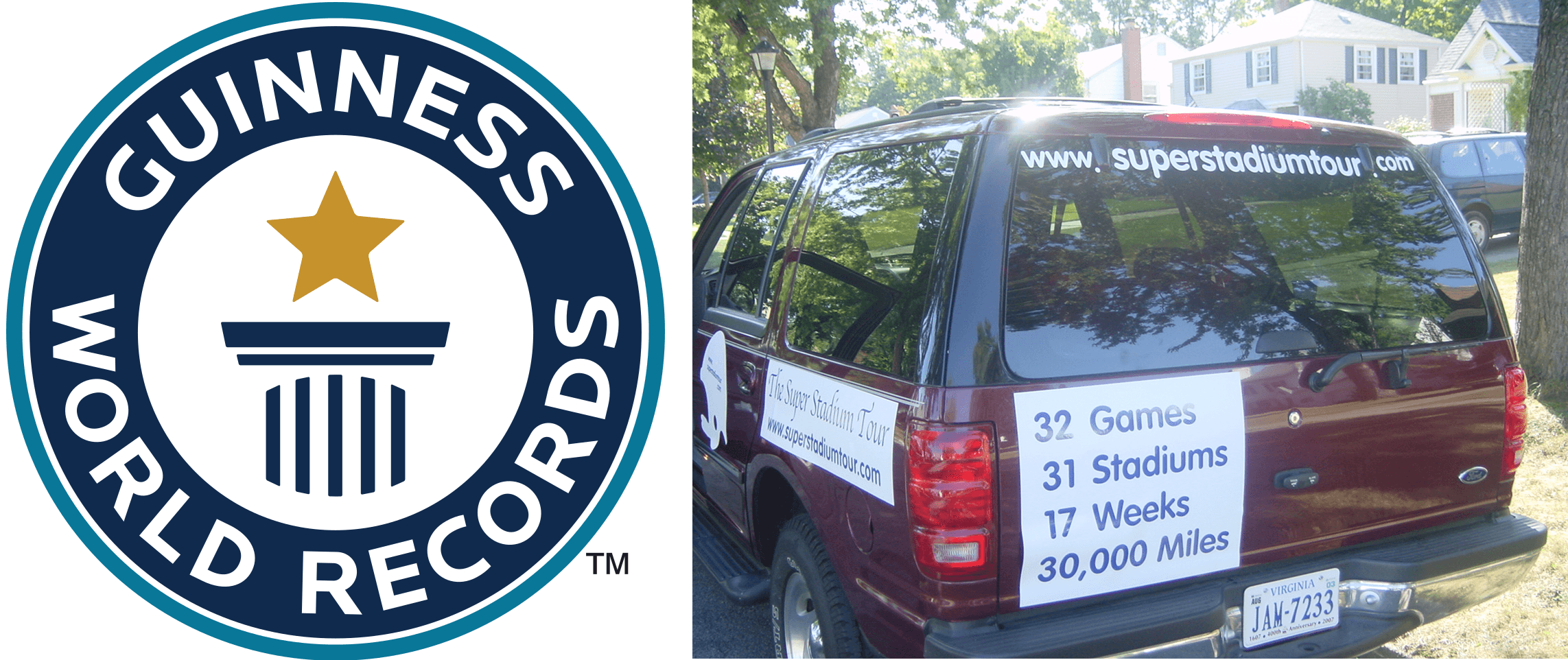
When Pete first pitched the idea to Guinness, it was met with immediate skepticism. The notion of driving to every stadium in a season simply did not exist in the popular record book. They originally rejected his proposal — citing the logistics, the lack of precedent, and a doubt that sports fans would care. Considering that Guinness is a UK-based enterprise, he faced the monumental task of trying to convince a bunch of Brits that American Football had the global appeal of their own native “football”. But Pete persisted. He argued that his proposal was more than just a casual concept. It was a celebration of true fandom, and a tribute to the league’s reach across the American continent. His plea to Guinness eventually broke through, and they agreed to certify his attempt with strict conditions: he had to attend full games (certify that he was in his seat at kickoff and still there as the clock expired), keep tickets or stubs from each game, and drive safely (no speeding tickets).
The technological environment Pete faced at the time was far more primitive as well. He did not have the benefit of digital ticketing or online brokers with buyer protection. He purchased tickets through early online marketplaces like eBay or from scalpers outside stadiums, where trust was often the only guarantee of entry. Electronic ticket transfer did not exist, so physical tickets had to be mailed or handed off, sometimes through the U.S. Postal Service, adding an entirely different layer of complexity to his task. Navigation was done with atlas books and paper road maps (the type you'd buy at a gas station that never folded quite right), and weather warnings came from radio reports rather than smartphone alerts. There were no GPS satellites guiding him around construction, no apps offering real-time traffic data, and no wide array of travel tools that record seekers use today to optimize routes and schedules. Pete often lived out of his car for multi-week stretches without the advantage of AirBnB to provide suitable, inexpensive lodging. The available creature comforts were crude, by today's standards.
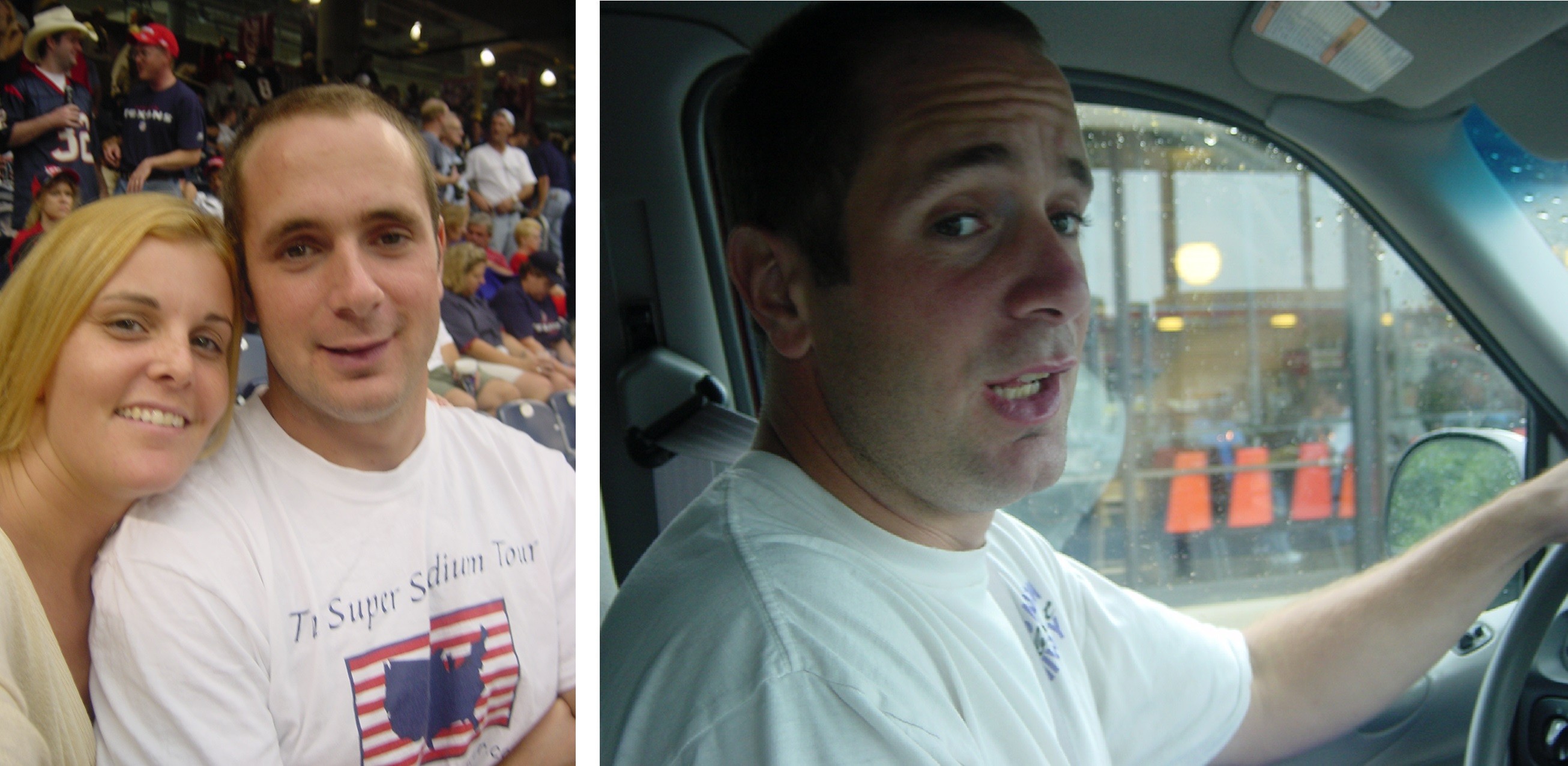
In those early autumn weeks of 2002, America was also in the midst of a cultural shift. Baseball’s long-held position as the nation’s pastime was giving way to the NFL’s ascendancy as a juggernaut in American sports. Pete’s Super Stadium Tour arrived at a moment when football was becoming firmly embedded into American culture, touching television screens, conversations and weekend travel plans in ways previously unseen. Tailgating was also evolving, fans were traveling farther for away games, and the idea of “stadium tourism” began to take hold. People wanted to see new cities, experience new stadiums and immerse themselves in the gameday culture of rival fan bases. In many ways this shift can be traced back to Pete’s journey, which paved the way for others to think beyond their home stadium and consider their favorite sport as an invitation to explore the country. Yet despite that rising enthusiasm, the NFL calendar he faced was far less accommodating than the one fans enjoy today.
The NFL landscape Pete navigated in 2002 was far more condensed than the sprawling multi-day schedule fans know today. Most games were played on Sundays, with only two Thursday night matchups that entire season, Opening Day and Thanksgiving. There were no Black Friday games, no Christmas Day showcases, and no Monday Night Football doubleheaders. In contrast, the modern league stretches 17 regular season games across 18 weeks with additional primetime and holiday windows. Back in 2002, the traditional 16 game slate simply offered fewer opportunities and a far narrower weekly schedule for anyone attempting a record setting stadium run.
For contemporary record seekers, the prominence of Thursday Night Football and annual holiday games has vastly increased their potential scheduling opportunities. That expansion of game time scheduling creates room for what I like to call the “Gridiron Four-Play”: a rare alignment where a newcomer can attend a Thursday night game, then a Sunday afternoon and Sunday evening doubleheader, and finally a Monday night game — all in the same extended weekend. With careful planning, geographical proximity, the right road conditions, and even a conveniently placed Friday or Saturday game, modern fans can conceivably string together four or even five NFL games in a single weekend. Back in Pete’s time, this was nearly impossible. He had to rely on sheer determination, that Rand McNally road atlas, and gut instinct.
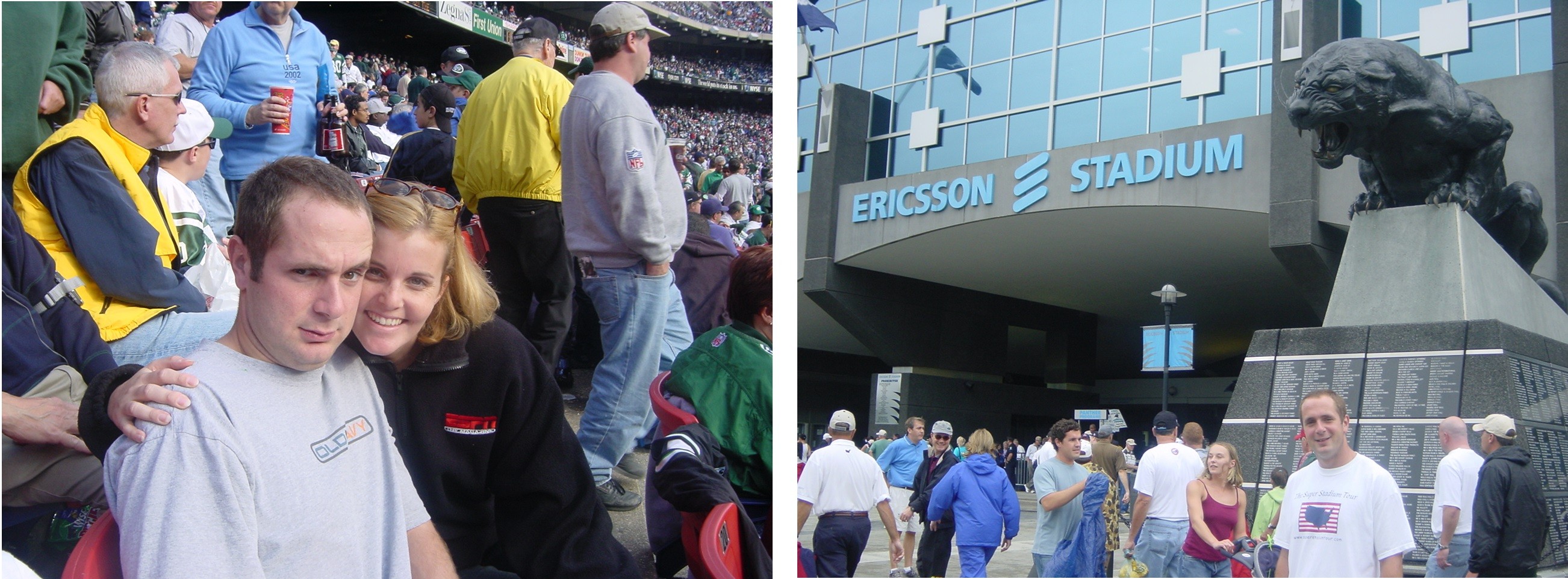
Still, Pete’s physical endurance and logistical smarts carried him through. He traveled through 42 states, living out of his Ford Expedition through stretches of the journey, and he made sure each stop was valid for Guinness certification. His season ended on December 22, 2002 in Kansas City, Missouri. He had not only completed the tour, but he'd done so in a way that set the template for anyone who followed.
Beyond the record itself, Pete’s journey shifted how fans view the NFL experience. Before 2002, traveling to away games was often treated as a one-off vacation or an occasional adventure. After his Super Stadium Tour, it became something more — a quest, a personal challenge, and a lifestyle. Fans now take pilgrimages, plan interstate road trips, and view the parking lot as part of the destination. Tailgating, road travel, and stadium tourism all gained new meaning.
Two decades after Pete’s groundbreaking tour, fans continue to chase the records he inspired. The latest is Brian Fowler, a devoted Raiders fan who is attempting one of the most ambitious NFL journeys ever undertaken. Fowler is not just trying to break a record. He is aiming to demolish both of them at once. His goal is to attend fifty-six games during the 2025 NFL season while also completing the fastest tour of all stadiums. To accomplish this, he plans to string together triple-header weekends for 18 weeks including three Girdiron Four-Plays in weeks 13, 16 and 17.
Unlike Pete, Fowler benefits from the expanded NFL week. He has Thursday night games every week, Saturday games sprinkled throughout the calendar, the annual Black Friday matchup, Christmas games, and the possibility of the rare Sunday afternoon and Sunday evening doubleheaders in adjacent markets. It is a logistical puzzle that’s made possible only by the modern NFL schedule.
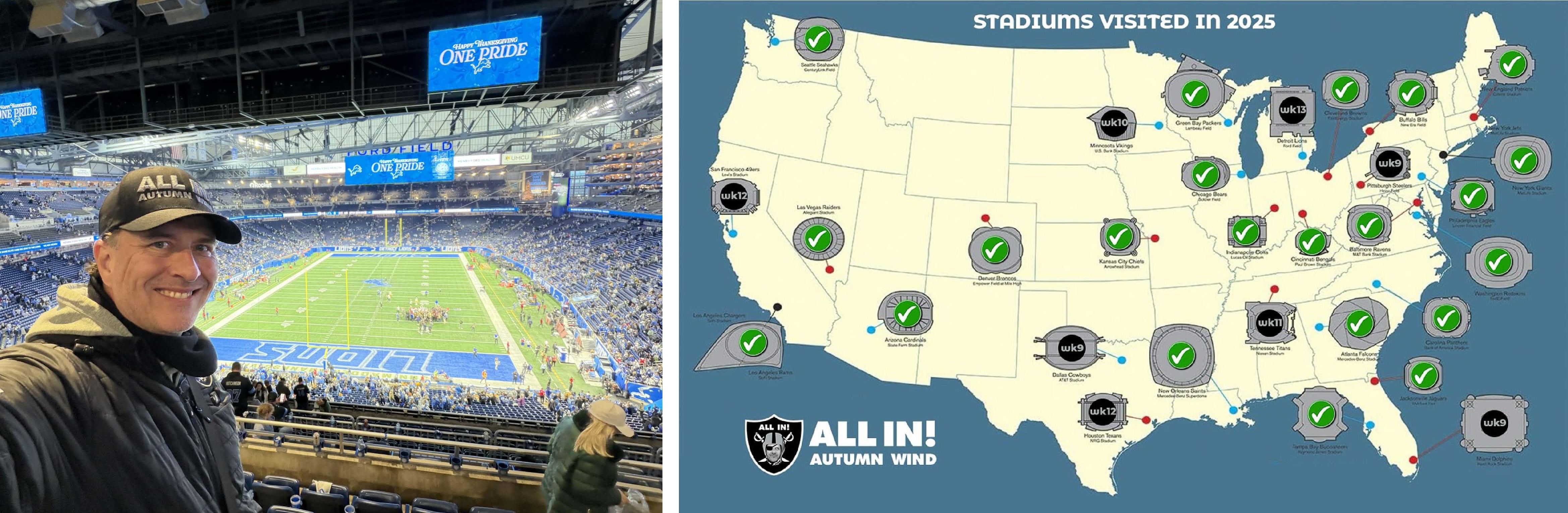
Fowler’s attempt will be fascinating to watch, not only because of the difficulty, but because it illustrates how far the NFL travel culture has come since Pete first imagined that his idea could matter. Today fans can follow Fowler’s progress online in real time and track his weekly movements through apps, maps, and social media. Records are meant to be broken and Brian Fowler is looking to set a high bar, but yet, at the heart of Fowler’s mission sits a truth that cannot be overlooked. None of this happens without Peter Baroody. There is no stadium race, no record culture, no cottage industry of NFL travel bloggers and stadium tourists without the man who convinced Guinness to recognize something they had initially dismissed. Pete fought to prove that fandom could be measured by passion and persistence. He created a space for other fans to dream bigger than their living rooms and home stadiums.
As I celebrate my twentieth season of Questing for 31, I return to that simple fact. Brian Fowler is chasing a record in 2025 because Peter Baroody chased the possibility in 2002. Pete built the blueprint. The rest of us have simply been inspired to follow it.
In the years after his record-setting tour, Pete turned his passion into service. He founded Baroody Camps in 2003, offering enrichment programs for children throughout the Washington, D.C. area. That organization has since grown into a network of after-school and summer camps for over 75 schools, giving young people opportunities in athletics, academics, and the arts. His commitment to youth development reflects the same energy that drove his NFL odyssey — a belief that perseverance, planning, and heart can change lives.
Peter Baroody remains a living legend in the tailgating and NFL travel communities. His effort was not just a fast road trip or a world record. It was the beginning of a movement. Peter Baroody proved it could be done. More than that, he proved it was worth doing.